Story
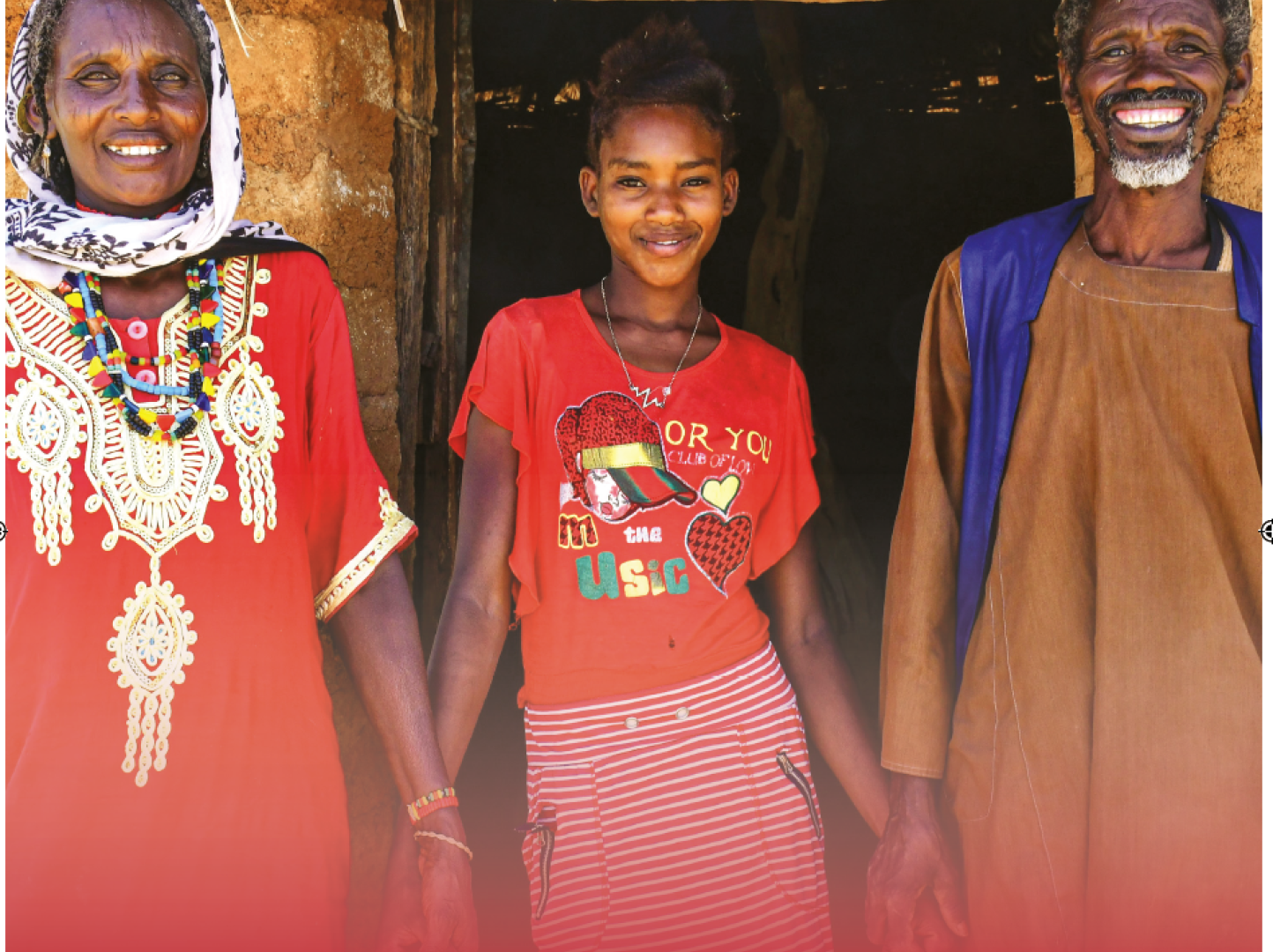
Community health volunteers lead the drive against malnutrition in Eritrea
Trained community health volunteers are able to screen and detect malnutrition among children under five and refer them to health facilities for treatment.
Read more
Latest
The Sustainable Development Goals in Eritrea
The Sustainable Development Goals are a global call to action to end poverty, protect the earth’s environment and climate, and ensure that people everywhere can enjoy peace and prosperity. These are the goals the UN is working on in Eritrea:
Story
17 June 2021
The Sustainable Land Management (SLM) project interventions in Serejeka sub-zone
Natural resources are central to the livelihoods of the Eritrean population with over 80% of the rural populations being engaged in agricultural and natural resources-related activities.
However, severe land degradation which is arguably the most critical environmental problem facing the country has negatively affected agricultural production leading to increased vulnerability of local communities.
To address these challenges, UNDP Country Office partnered with the Government of the State of Eritrea, the Global Environment Facility (GEF), and NORAD to develop the project on Sustainable Land Management (SLM) which has been implemented in 28 villages of the Serejeka sub-zone covering about 240,000 ha.
The project addresses the main causes of land degradation in the Central Highland zone of Eritrea, including deforestation, inadequate agricultural practices, overgrazing, and insecure land tenure; with the main purpose of building a new sustainable land management model that addresses these causes through a combination of soil and water conservation activities with a new land tenure system that offers lifelong use of land to farmers as stipulated in the 58/1994 National Land Proclamation.
1 of 5
Story
14 April 2021
Tracking progress towards the achievement of universal health coverage: Eritrea
The Honorable Minister of Health welcomed everyone and elaborated that the aim of the meeting was to review the implementation progress. Dr Martins Ovberedjo, WHO Representative, thanked the Ministry of Health (MOH) and Government on behalf of WHO for their commitment to follow up on agreed milestones.
The meeting discussed key implementing challenges and their possible solutions covering various programmes including Reproductive, Maternal Newborn, Child, and Adolescent Health (RMNCAH), EPI (Immunisation), Health Systems Strengthening (HSS), Health security (health emergencies) and international health regulations (IHR) among others. The highlights of the areas covered are outlined below:
Leadership and governance: Finalization of the National Health Policy and the Essential Health Care Package (EHCP), strengthening the supportive supervision to the lower level health facilities and development of the new national health sector strategic development plan.Health services delivery: Updating and implementing the priority areas of the National Action Plan for Health Security (NAPHS).
Health workforce: Updating of the Human Resources for Health strategic plan.Health information: Continued implementation of the integrated African health observatory, planning and implementation of the for the Harmonized Health Facility Assessment (HHFA) and implementation of data quality assessment.
Medical products, vaccines and technologies: Tracking the implementation of the EPI programme activities which include the EPI programme review and development of the next comprehensive Multi-Year Plan (cMYP) for immunisation.
Health financing: Reviving the efforts to build capacity and implement the National Health Accounts (NHA) The Honourable Minister of Health ensured that there were dedicated senior MOH personnel to lead in the implementation of the action points agreed upon in this meeting as part of the collaborative efforts with WHO.
At the end of the meeting the Honourable Minister of Health thanked everyone for participating in the meeting and remarked that it was a fruitful meeting. In turn Dr Martins Ovberedjo congratulated Her Excellency, the Minister of Health and Government for efficient management and implementation, as well as their continued commitment to implement UHC priorities. The WHO team outlined that all recommendations made will be acted upon collaboratively. The meeting reaffirmed commitment to implement the agreed upon milestones.
1 of 5
Story
07 April 2021
World Health Day April 7, 2021 Building a fairer, healthier world Message from WHO Eritrea Representative DR. Martins Ovberedjo
This year ‘s commemoration is key message is to call for urgent action to eliminate health inequalities and promoting health equity to “Build a fairer and healthier world”.
Inclusiveness and health equity are central to our global commitments to the UN 2030 Agenda for Sustainable Development Goals. The joint action on SDGs- “leave no one behind “ such as addressing the root causes of exclusion and poverty, achieving gender equality, granting food and nutrition security, ensuring access to quality and equitable education and lifelong learning, universal health coverage, as well as fighting climate change - contributes to achieving health equity globally, nationally and locally.
The WHO Thirteenth General Programme of Work 2019−2023 13 (GPW13) mission and goals are aligned with the agenda 2030. The three strategic priorities the triple billion goal by ensures healthy lives & promoting well-being for all ages – no matter who they are and where they live so can access essential, quality health services without facing financial hardship and with equity and serving the vulnerable are its mission goals .
The COVID-19 has shown us that no one is safe until everyone is safe, so it is time to build a fairer, healthier world for everyone, everywhere. In this difficulty and challenging COVID-19 pandemic era, it is high time to protect better one billion more people from any health emergencies which is among the three strategic priorities of general work plan 2030.
So, it is of utmost importance to ensure access of COVID-19 vaccines to every everyone and everywhere. To continue advocacy towards policy makers, partners, and the community on the importance of COVID-19 vaccines in prevention and control of the pandemic along the other public health measures, testing and treatments is needed.
To achieve this, it is important to raise awareness and catalyse public advocacy to address health inequalities and make efforts to address health equity. Engaging policy makers in building capacity to address health equity especially during this era of COVID-19 pandemic through advocacy and knowledge exchange throughout the year 2021.
The Eritrean government in recent years has recorded tremendous achievement in building a fairer health system, where heath facilities are acceded by the population free of charge. This achievement therefore should spur us in our endeavour to build a fairer, heathier Eritrean heath system and to give support to those who need it most. During this Covid-19 pandemic, this call for action could not be more imperative.
As commending the decisive leadership, great organization and coordination, and pragmatic planning with effective implementation of the Whole of Government Approach through engaging communities, Eritrean Youth and Students and Eritrean Women’s Union as well as Elders and Religious Leaders the state of Eritrea’s self-reliance policy and using its own resources to tackle the COVID-19 pandemic.
Decisive leadership was also reflected in the fact that strong, aggressive action was taken very early on in Eritrea, based on a clear understanding of the threat posed to the country by COVID-19. From the outset, timely regular updates, engage and provide the public with frequent clear, consistent, and trusted communication and public health information from the start. These ensured that the population is able to understand the magnitude of the problem and the rationale behind various preventive measures, clear communication dispels rumours and false or misleading information, and reduces unnecessary public anxiety, fear, or panic.
The most important dimension of the strategy taken by the GOE was the equity dimension and free access to get all aspects of COVID 19 management in rural and urban, male or female, rich and poor without any discrimination and provision of essential health services were free of charge with the goal of achieving Universal Health Coverage (UHC) without facing financial hardship.
Therefore, to support the achieved progress need to deepening Government, WHO and other UN Agencies partnership to promote health equity so that people of Eritrea can access essential, quality health services without facing financial hardship.
1 of 5
Story
20 November 2020
First WHO interregional training workshop on ensuring the quality of traditional, complementary and integrative medicine (TCI) products
The inaugural address was given by Dr. Zhang Qi, WHO Secretariat, where he explained the major purpose of the workshop and assured WHO’s assistance on implementing the WHO Traditional Medicine Strategy 2014-2023. Welcoming address was given by Dr. Choi Peng Cheong, Health Bureau, Government of Macao SAR, China; an introduction session by Dr. Aditi Bana, WHO Secretariat, followed by overview of current global situation of TM. Brief updates on regional perspective from AFRO and South-East Asia were given by Dr. Ossy Kasilo and Dr. Sungchol Kim, respective WHO secretariats. The introductory session was followed by a topic on ensuring quality of TCI products from patient safety perspective which highlighted quality assurance from patient perspective as well as requirements for a proper/safe use of a TCI products. Afterwards, country experiences from Ethiopia and Macao China were presented, outlining their working strategies and major challenges.
The second day of the workshop was about ensuring the quality of TCI products through policy and regulation. An introductory overview was given on the topic, outlining market authorization of TCI products in Brazil, quality control requirements for raw materials (herbal plants and herbal preparations), excipients and packaging materials, and finished herbal products, necessity of country’s legislation for counterfeit products. This was complimented by country experiences from Sri-Lanka, Tanzania, Turkey, Angola, Benin, China and Eritrea.
Representing Eritrea, Ms. Lemlem Hussien, TMU, NMFA presented country experience. She briefly explained the establishment and organizational structure of the Eritrean Traditional Medicine Unit; the Eritrean National Traditional Medicine Policy, its objectives and reasons for the delay in its implementation. She went on to describe the regulatory approach the unit follows in regulation of TM in the country and highlighted the TM-Related Adverse Events Reporting Form (Green Form). She concluded her presentation with the challenges the unit faces. Eritrea’s innovative tool i.e., the “Green Form” attracted participants’ attention and shared the form with countries that expressed interest.
The third and final day of the workshop covered ensuring the quality of TCI products through research. Professor Yoshinori Kobayashi, WHO Temporary Advisor-Research perspective, presented a well-founded lecture on how quality control of herbal products is conducted and what the major challenges faced are. Country experience were shared from Democratic Republic of Congo, Hong Kong SAR, Islamic Republic of Iran, and Mozambique.
Overall, the Eritrea team gained insight into vast experiences from countries around the world and the meeting provided a unique platform for exchange of ideas, experiences and network.
1 of 5
Story
19 November 2020
Community health volunteers lead the drive against malnutrition in Eritrea
Adi-Sagdo, Villago Community Hospital – At first sight, Genet Mahari 49, and Tieba Abraha 45, are just your everyday mothers going to visit a neighbour in the village. They call out from beyond the fence of wandering goats, and today they’ve come to visit 32-year-old Yodit Kidane and her two-year old daughter Sayda Solomon.
After exchanging a few pleasantries, the talk turns to the child.
“How are you little Sayda?” asks Genet as she lifts the child in her arms and coos to her gently. They ask Sayda’s mother for the child’s health card and Tieba produces a MUAC tape and proceeds to measure the mid-upper arm circumference of little Sayda. Tieba is concerned about the measurement of the child’s mid-upper arm.
“You need to take the child to the Villago Community Hospital,” Tieba says to Sayda’s mother Yodit. “We think she’s not getting enough nutrition in her diet.”
Genet and Tieba are community volunteers who have been trained on the community mobilization, screening, and defaulter tracing for integrated management of acute malnutrition (IMAM) and on community-based infant and young child feeding (cIYCF) practices by the Ministry of Health, with support from UNICEF. The volunteers are trained to use the MUAC tape to measure whether a child is malnourished or not.
Twice a year, the health volunteers also receive refresher trainings on various topics including advising mothers how to prepare healthy nutritious foods using locally available resources. Between themselves and six other community volunteers, Genet and Tieba are responsible for 418 households in their community.
After bidding farewell to Yodit, the duo move on to other homes on their list and repeat the procedure.
UNICEF supports the Ministry of Health (MoH) to build its systems to improve the delivery of services, and to provide quality treatment of Severe Acute Malnutrition (SAM) effectively reaching almost 50,000 acutely malnourished children with lifesaving interventions every year.
At the community hospital, Yodit and Sayda are met by Alganesh Takaste, the resident nurse and the Nutrition Focal Person who checks the child’s health card and promptly assess her weight and height. Sayda weighs only 8.5 kgs and is 77 cm tall, which is a bit low for her weight and her height.
“I will provide you with some supplementary food and teach you how to prepare it and feed it to your child. You will come back to me after one month and we will check her again,” says Alganesh to Yodit.
Yodit receives six bags of UNIMIX which is a fortified corn-soya blend and is highly nutritious and proven to help children regain their weight.
Every year, UNICEF procures nutritional supplies to treat malnutrition among children under-five which include (RUTF, F-100, F-75 and Resomal and Unimix). UNICEF also supports the trainings of health volunteers like Genet and Tieba who are at the forefront of the efforts to detect, prevent and treat malnutrition.
Additionally, UNICEF procures medicines to treat common childhood illnesses and Vitamin A supplements, and vaccines to prevent other diseases like measles, tuberculosis etc, which are closely linked to malnutrition.
UNICEF supports the Government of the State of Eritrea in its efforts to provide equitable health services to all the children of Eritrea and towards achievement of the Sustainable Development Goals related to health. UNICEF’s partnership with and support for the government’s efforts is augmented through the generous contribution of donors who provide regular resources; and donors like the Government of Ireland and the Government of Italy who provide funding for UNICEF’s Humanitarian Action for Children (HAC), that supports life-saving interventions for the children of Eritrea.
“We are happy that we are able to serve our own communities and feel proud that our small efforts help to support the government’s goals to treat malnutrition at the community level, so that all our children are healthy and nourished,” say Genet and Tieba, smiling with the knowledge that they are respected members in their communities.
1 of 5